There is a valley in the heart of Italy that most travellers never find. It runs between the rolling hills of Umbria and the borders of Tuscany, threaded by a gentle river and lined with oak and chestnut forests, ancient hilltop villages, silvery olive groves, and — come July — seas of sunflowers so vast and golden they seem almost unreal. This is the Valle del Nestore, known to those who love it simply as the Niccone Valley. And it is, without question, one of the most beautiful corners of the entire country.
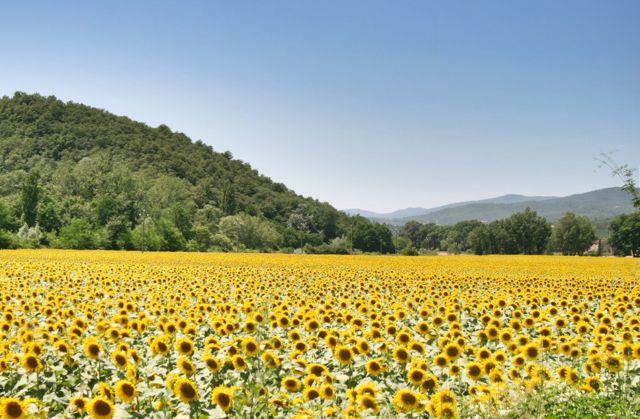 The Niccone Valley in July — sunflower season transforms the valley floor into a sea of gold
Where Exactly Is the Niccone Valley?
The Niccone Valley occupies a long, lush corridor running roughly northeast to southwest between the upper Tiber Valley near Umbertide and the hills rising above Cortona and Lake Trasimeno. It lies in the province of Perugia in Umbria, sharing a border with Tuscany to the west — which means that staying here gives you effortless access to both regions.
Casa Luna Guesthouse sits in one of the valley's most beautiful stretches, perched on a hillside above the valley floor with sweeping views in every direction. From our terrace, on clear days, you can see hills rolling endlessly into the distance — Umbria to the east, the outline of Tuscan ridgelines to the west.
Perugia Airport (PEG) is just 35 minutes away and connects to several European cities. Florence Airport is 90 minutes. A car is essential — and once you're on the valley roads, you'll be glad you have one.
The Valley's Secret: Why Nobody Knows About It
The Niccone Valley has escaped mass tourism for a simple reason: it isn't on the way to anywhere famous. Travellers rushing between Florence and Rome never pass through it. The nearest large town, Umbertide, is modest and unshowy — its charms reward those who seek them out rather than advertising themselves. The valley itself has no single landmark to anchor a tourist trail, no famous painting in a famous church, no UNESCO designation to draw the tour buses.
What it has instead is something infinitely more valuable: authenticity. The farms here are still working farms. The villages are still lived in by the families who have always lived there. The roads are still quiet enough that a cyclist can stop in the middle of the tarmac to watch a hoopoe bird investigate a stone wall without a single car arriving for five minutes. This is the Italy that existed before tourism — and it still exists here.
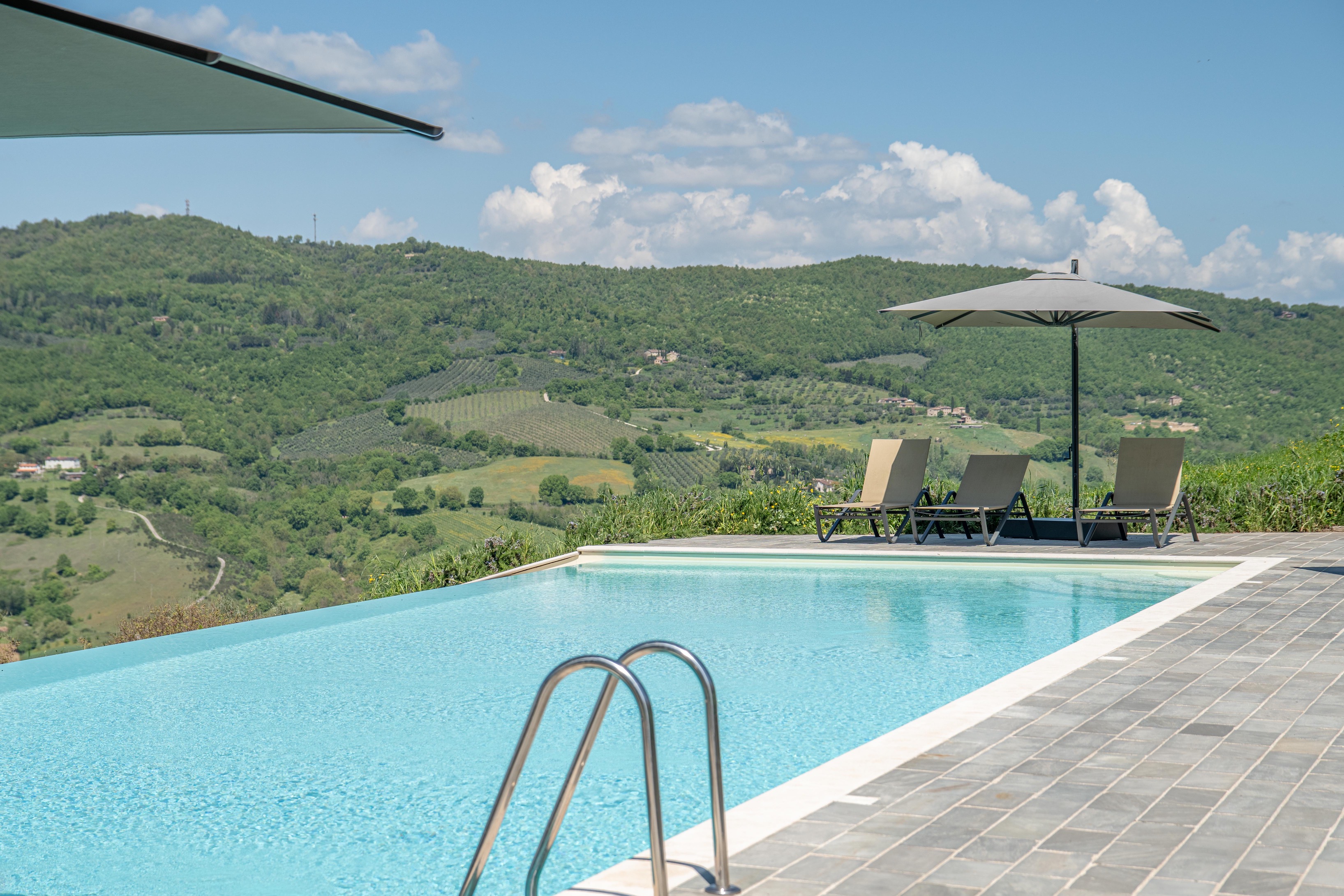
 The valley from Casa Luna's infinity pool terrace (left) and the estate from above (right)
The Sunflowers
If you visit in July or early August, you will encounter one of the valley's most spectacular seasonal events: the sunflowers. Local farmers rotate crops across the valley's broader fields, and in years when sunflowers are planted, they create extraordinary landscapes — dense oceans of yellow, six feet tall, stretching from the valley floor to the lower hillsides, buzzing with bees, scented faintly of warm earth and pollen.
Driving through the valley in full sunflower season is an experience that stays with you. Stop the car. Walk to the field edge. Look back at the wooded hills behind you, and forward into an infinity of gold. It is one of those rare travel moments that no photograph fully captures — though it is impossible to stop trying.
Things to Do: A Season-by-Season Guide
🚴 Cycling
The Niccone Valley is one of the finest cycling destinations in Central Italy. The valley floor offers gentle routes following the Nestore river — suitable for all fitness levels and perfect for a long, lazy morning with a gelato stop in Umbertide. For the more ambitious, the roads climbing to the ridgeline villages reward effort with panoramic views stretching to Monte Amiata on clear days. Bike hire is available in Umbertide, and several local operators offer guided cycling tours that include stops at small farms and wine producers.
🥾 Hiking
A network of marked trails crosses the valley — through chestnut and oak forests thick with birds, past the tumbled walls of Etruscan settlements, and along exposed ridgelines with views in all directions. The walk between the medieval hamlet of Morra and the village of Pierantonio is particularly beautiful, taking in forest, farmland, and ancient stone villages in a single circuit. Ask us at Casa Luna for our recommended trail maps and we'll point you to the routes that suit your pace.
Truffle Hunting
The oak forests of the Niccone Valley are prime truffle territory — both the prestigious black Périgord-style truffle (in season November through March) and the valuable summer truffle (June through August). Arranging a morning hunt with a local trifolao and his trained dog is one of the great Umbrian experiences: an early start, a walk through ancient forest, the extraordinary spectacle of a dog following its nose to a buried treasure six inches underground. Most hunts end with a tasting of the morning's finds — shaved over fresh pasta or scrambled eggs — that you will remember for years. We can arrange this through Casa Luna; just ask.
🌊 River Swimming
In summer, locals swim in the Nestore river — crystal-clear mountain water that stays refreshingly cool even in August. There are several natural bathing spots along the valley that you won't find in any guidebook. Ask us and we'll tell you where to go — it's one of those things that makes a Niccone Valley summer genuinely perfect.
Wine & Olive Oil
Several small producers in and around the valley welcome visitors for tastings. The local Colli del Trasimeno DOC wines are excellent and little-known outside the region. The olive oil — pressed from groves you can see from Casa Luna's terrace — is among the finest in Umbria: intensely green, peppery, and grassy when freshly pressed in November.
⭐ Stargazing
The Niccone Valley sits far from any significant urban light pollution. On clear nights — and clear nights are common here from May through October — the sky above the valley is extraordinary. The Milky Way is clearly visible. The silence is total. From Casa Luna's garden terrace, lying on a lounger and watching the stars emerge as the last light drains from the western hills is one of the purest pleasures this place offers.
May–June: Wildflowers, perfect temperatures, quiet roads.
July: Sunflowers at peak, warm evenings, long days.
September–October: Harvest season, truffle beginnings, golden light.
November–March: Black truffle season, misty mornings, total peace.
The Villages
Dotted along the valley ridges and in its side-valleys are a series of small medieval villages that repay leisurely exploration. Morra, high on a forested spur, is barely changed since the 15th century — a single street, a church, a view that stops the breath. Preggio is another hilltop gem, its stone houses clustered around a Romanesque church with a bell tower that rings the hours across the valley below. Mercatale descends the hillside in terraces of stone and flowers. None of these appear in most guidebooks. All are within 20 minutes of Casa Luna.
Nearby: The Best of Both Regions
The valley's position on the Umbria-Tuscany border is one of its greatest assets. Cortona — the hilltop Tuscan town made famous by Frances Mayes — is just 30 minutes away. Perugia, Umbria's magnificent capital, is 40 minutes. Assisi is 50 minutes. The extraordinary Gothic cathedral of Orvieto is 75 minutes. You are, in other words, perfectly positioned to explore two of Italy's most celebrated regions — while coming home each evening to a valley that most visitors to both never find at all.
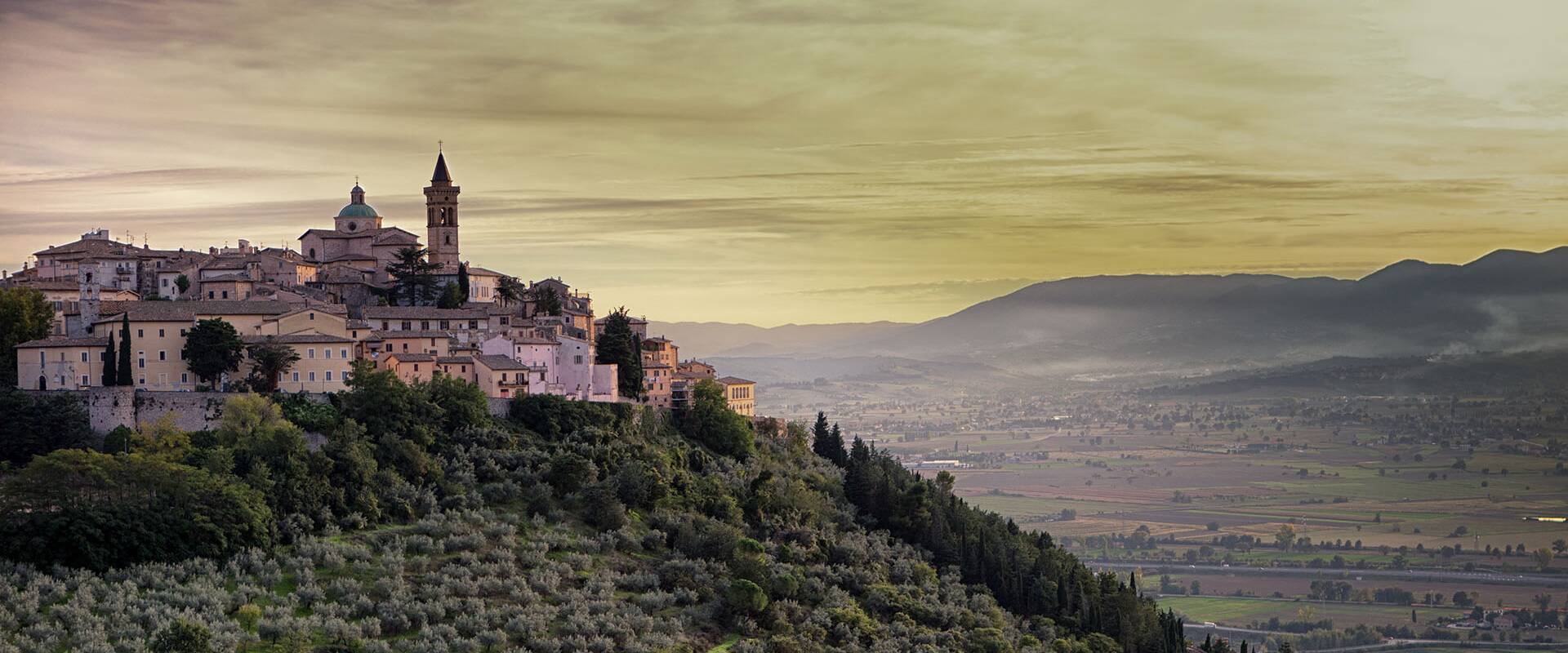 The hilltop towns of Umbria — all within easy reach of the Niccone Valley
How to Make the Most of Your Stay
The Niccone Valley rewards a slower pace than most Italian destinations. Don't try to do too much. Spend a morning cycling the valley floor and an afternoon reading by the pool. Dedicate a full day to Cortona and another to Perugia. Take one evening to drive up to Preggio and watch the sun set over the hills from the village square. Go truffle hunting if you can. Swim in the river. Eat well — the local restaurants in Umbertide and the surrounding villages are excellent and inexpensive, serving the honest, deeply satisfying cucina umbra that rarely makes it to restaurant menus outside the region.
Most of all: slow down. Let the valley set the pace. It has been here for millennia, and it knows something about time that the rest of the world has largely forgotten.